

Creative Placemaking Plan to Revitalize Portlands Eliot Neighborhood
Updated: Oct 2
A building can serve a neighborhood, or it can sit inside one without truly belonging to it. That difference matters in Portland’s Eliot neighborhood, where decades of systemic racism, disinvestment, displacement, and uneven access to cultural resources have shaped who benefits from public and arts infrastructure.
Open Signal, formerly Portland Community Media, had a chance to ask a deeper question: how could its facility become more useful, more welcoming, and more accountable to the community around it?
Teresa’s capstone project, completed as part of the Certificate in Creative Placemaking through the New England College Institute of Art and Design and the National Consortium for Creative Placemaking, offered a thoughtful answer. The plan connected arts access, neighborhood history, community stewardship, and long-term development into one grounded proposal.

Why Eliot needed more than a facility upgrade
Eliot has long been one of Portland’s historically African American neighborhoods. Like many such neighborhoods across the country, it has carried the effects of policies and practices that limited wealth-building, weakened infrastructure, and restricted access to opportunity.
That history is not background detail. It is central to the plan.
When cultural assets are added to neighborhoods after long periods of disinvestment, the benefits often flow first to newer residents, outside developers, visitors, or institutions. Longtime residents may get more traffic and higher costs, but not more ownership, programming, or influence.
The capstone recognized that risk. It framed Open Signal’s future not as a standalone capital project, but as a repair-oriented community investment.
A creative placemaking plan to revitalize Portlands Eliot neighborhood had to do more than add arts programming. It had to ask who the programming served, who shaped it, and who could afford to remain nearby as the neighborhood changed.
The research started with the neighborhood, not the building
A strong placemaking plan begins with baseline data. Teresa’s study looked at the forces shaping Eliot and Portland more broadly, including:
Portland’s cultural and political history
Demographic and economic shifts from the prior decade
Existing cultural spaces and gaps in access
Development opportunities within the current political environment
Gentrification pressures affecting Eliot residents
The shrinking supply of housing within the city
This research helped move the project beyond good intentions. It gave the recommendations a clearer foundation.
The plan also treated data as only one part of the picture. Numbers can show rising costs, changing demographics, and gaps in cultural access. They cannot fully explain memory, belonging, trust, or loss. For that, the plan pointed toward direct community engagement and shared stewardship.
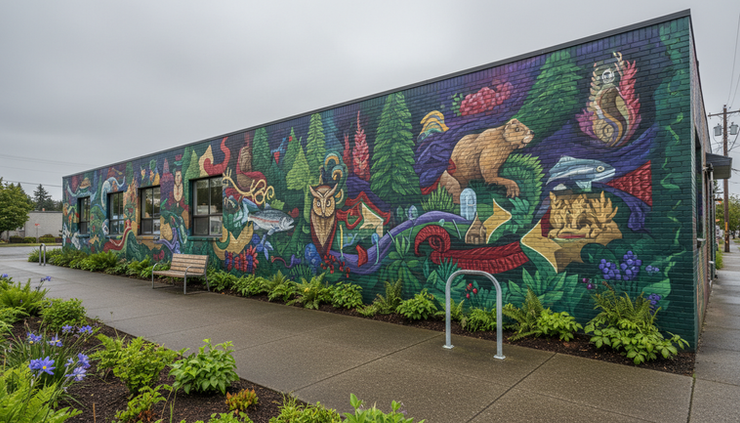
Three recommendations shaped the plan
The capstone centered on three major recommendations. Each one addressed a different piece of the same challenge: how to make Open Signal’s campus more useful to Eliot while reducing the risk that new cultural investment would leave longtime residents behind.
A new 300-seat venue would expand access
A 300-seat venue could give the neighborhood a flexible cultural space for film, performance, public dialogue, festivals, screenings, and community gatherings.
The size matters. A venue of this scale can host meaningful public events without feeling detached from the neighborhood. It can support local artists, youth showcases, intergenerational programming, and civic conversations.
For Open Signal, this kind of venue could also connect media arts with live gathering. A screening could become a neighborhood forum. A youth media project could become a public celebration. A festival could bring residents, artists, and local organizations together in one shared space.
Arts incubation would support local creative work
The plan also recommended arts incubation programming. That could include support for emerging artists, media makers, cultural organizers, and community storytellers.
Arts incubation is valuable when it removes barriers. Equipment, space, mentorship, training, and presentation opportunities can make a real difference for people who have talent but lack access to institutional support.
For Eliot, the key would be designing these programs with residents, not simply offering them to residents. The plan’s emphasis on testing assumptions matters here. Community members would need to help define what support looks like, which art forms should be centered, and how participation should remain accessible.

Affordable housing for artists would address displacement pressure
The third major recommendation was affordable housing for artists. This was not an add-on. It spoke directly to Portland’s diminishing housing inventory and the displacement pressures felt in neighborhoods like Eliot.
Arts districts can become victims of their own appeal. Artists help create cultural energy, then rising rents push them out. Longtime residents may face the same pressure. If a cultural project contributes to neighborhood desirability without addressing housing, it can worsen the inequity it hoped to solve.
Affordable artist housing would help tie cultural investment to stability. It could support artists who already have connections to the area, create room for new creative work, and keep the campus active beyond event hours.
Housing also signals a long-term commitment. It says the goal is not only to bring people in for programming, but to help people stay.
Community stewardship is the plan’s backbone
The capstone did not treat Open Signal as the sole decision-maker. It called for a working group of community members to guide the process, learn more about local needs, and test assumptions before locking in major choices.
That is one of the plan’s strongest ideas.
A working group can help keep the project accountable if it has real influence. It should include people with lived experience in Eliot, artists, neighbors, cultural workers, youth voices, elders, and partners who understand housing and development pressures.
The group’s role would be practical as well as symbolic. It could help answer questions such as:
Which programs would serve existing residents first?
What barriers keep people from using Open Signal now?
How should the proposed venue be scheduled and priced?
What partnerships would build trust?
How can festivals and campus activities avoid displacing neighborhood priorities?
Community engagement should not be a single listening session. It should be a repeated process that shapes design, programming, governance, and evaluation.
Activation should build belonging, not just attendance
The plan imagined new programs that could activate the campus through arts programs and festivals. That kind of activity can bring energy to a site, but attendance alone is not the best measure of success.
A stronger measure is belonging.
Do Eliot residents see themselves reflected in the programming? Do longtime neighbors feel welcome on the campus? Are local artists paid and credited? Can youth access tools and training? Are events affordable? Does the project create pathways into leadership?
These questions keep creative placemaking tied to equity. They also make the work more durable. A campus that neighbors trust will have deeper roots than one that only attracts occasional visitors.

What this plan offers Portland
Teresa’s proposal gives Open Signal a path to grow without ignoring the harms that shaped the neighborhood around it. It connects cultural space, artist support, housing, and community governance in a way that responds to Eliot’s specific history.
The plan’s most useful lesson is simple: revitalization must include the people who carried the neighborhood before new investment arrived.
For Open Signal, that means the facility’s transformation should be measured not only by new construction or fuller event calendars. It should be measured by whether Eliot residents gain access, voice, opportunity, and a stronger claim to the cultural future of their own neighborhood.


Comments